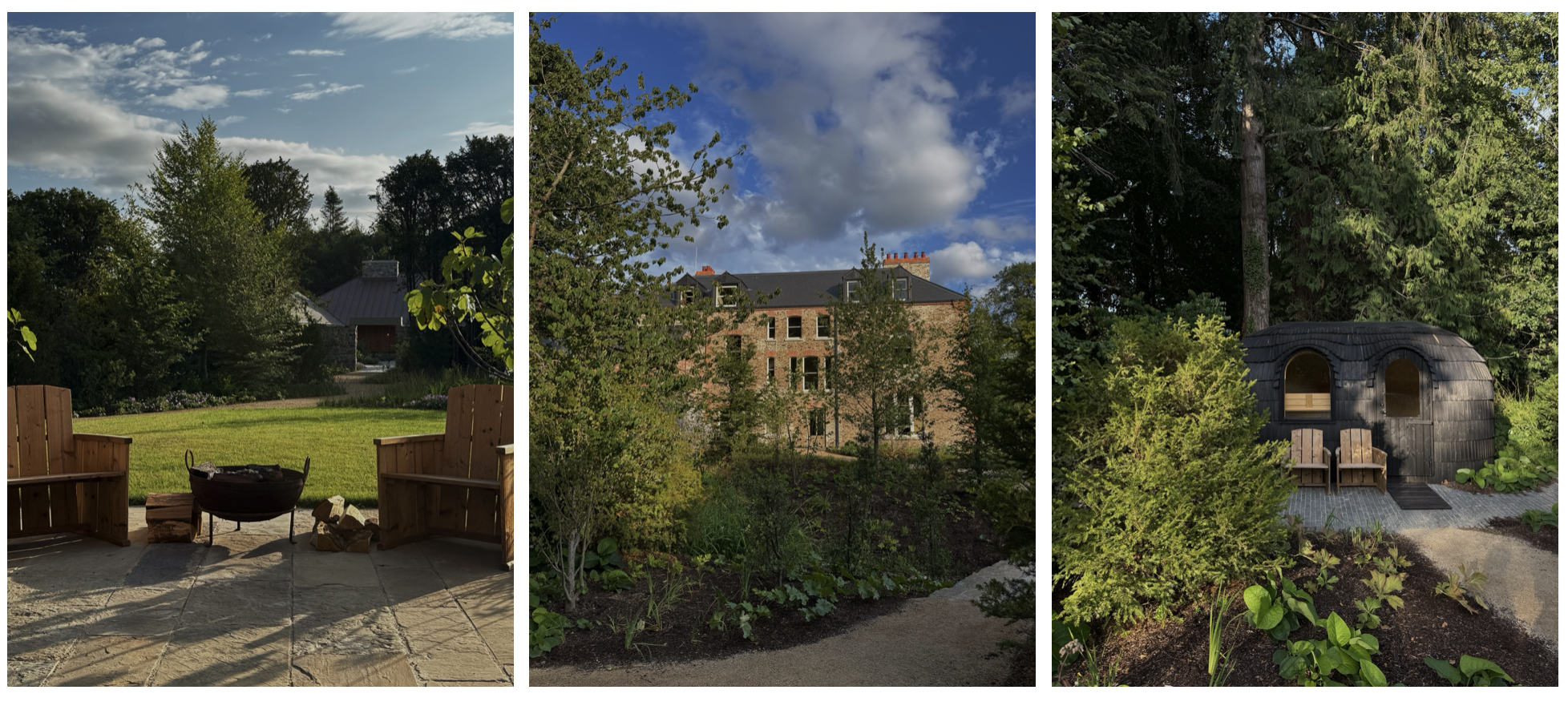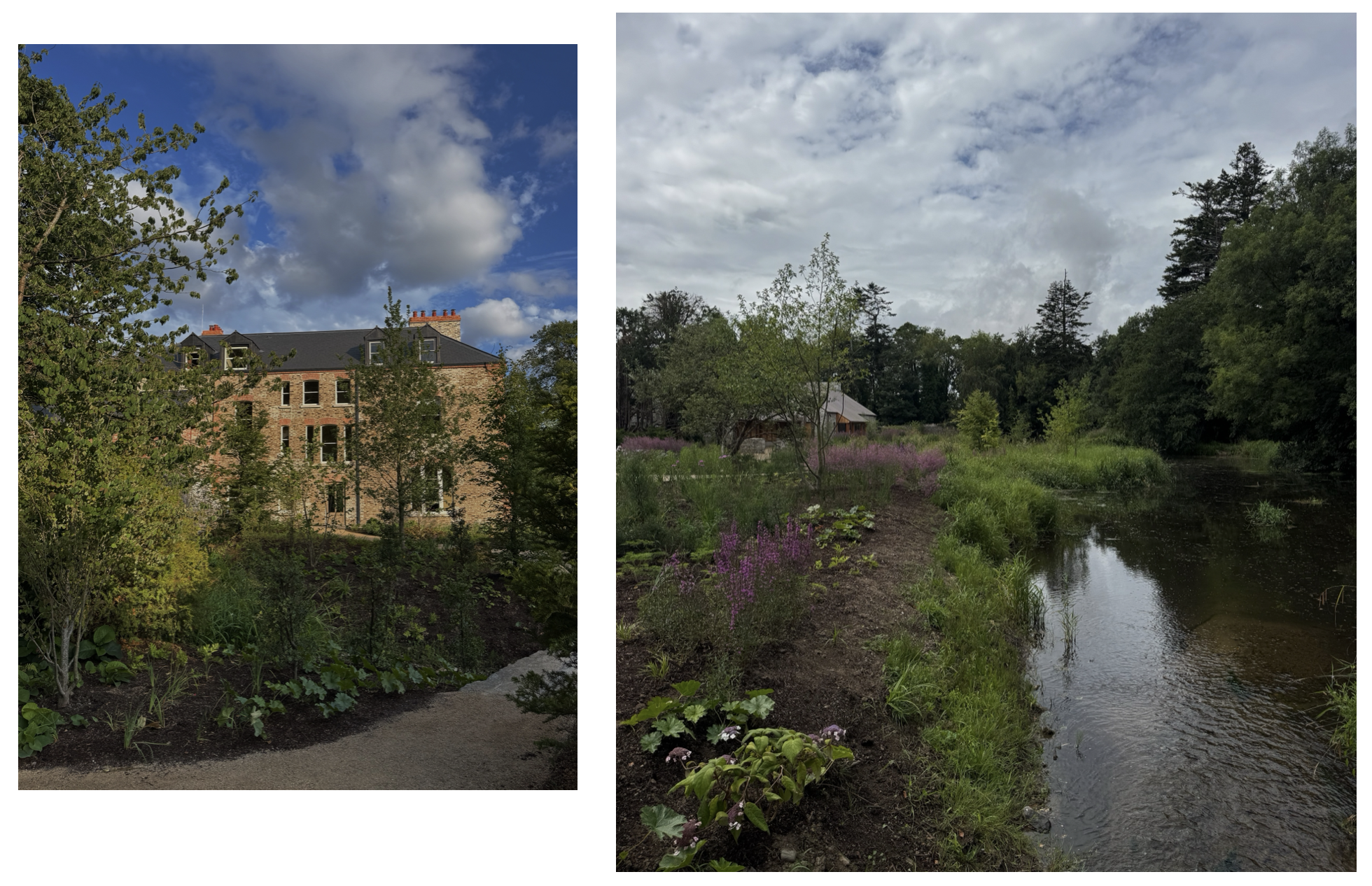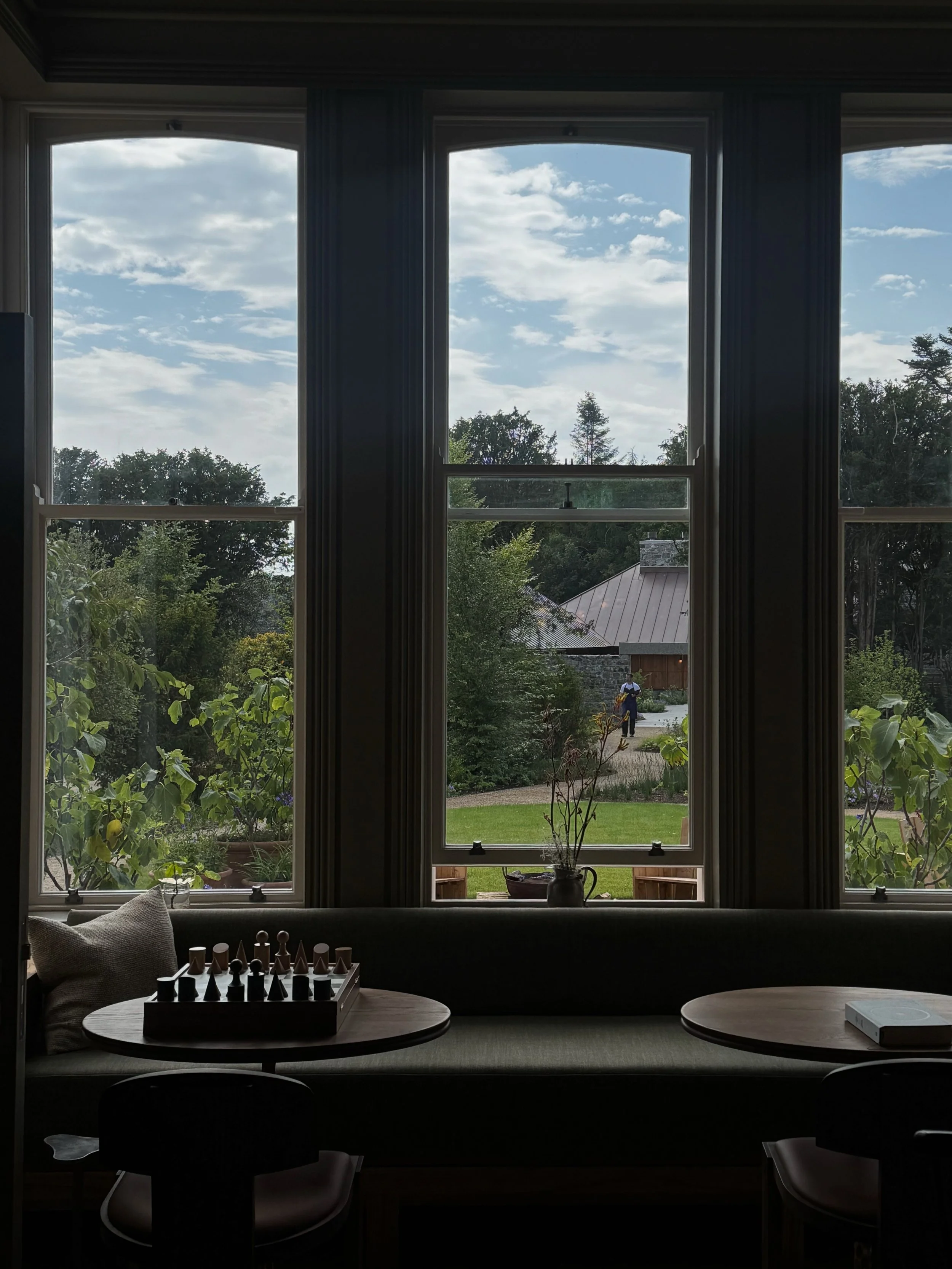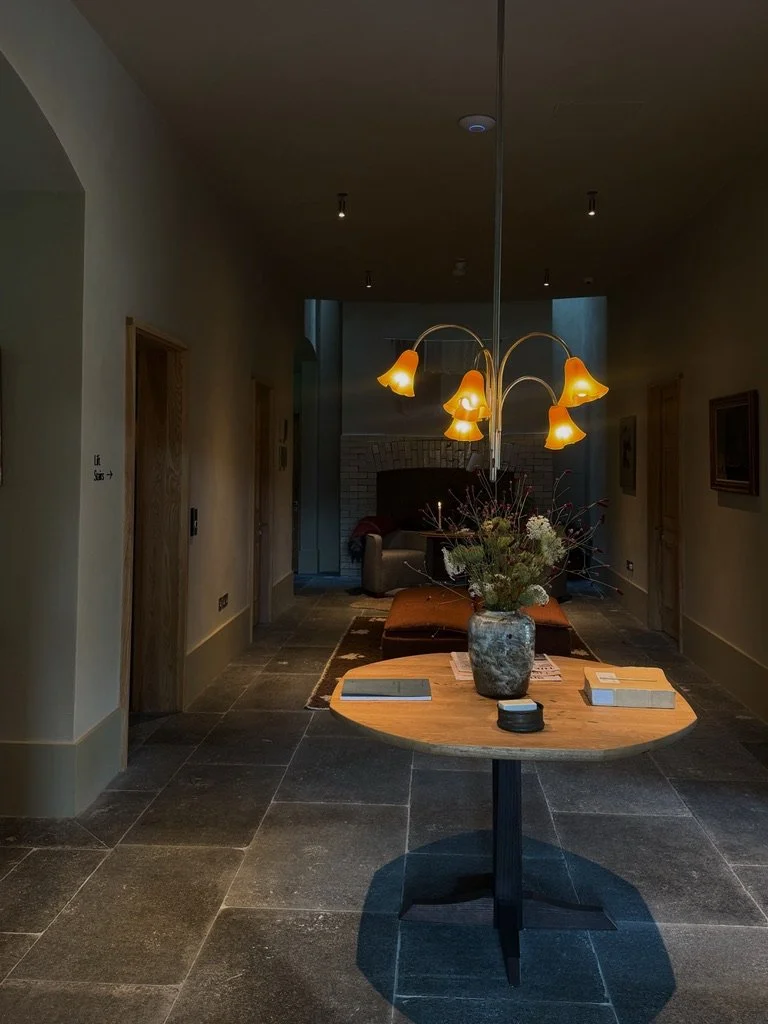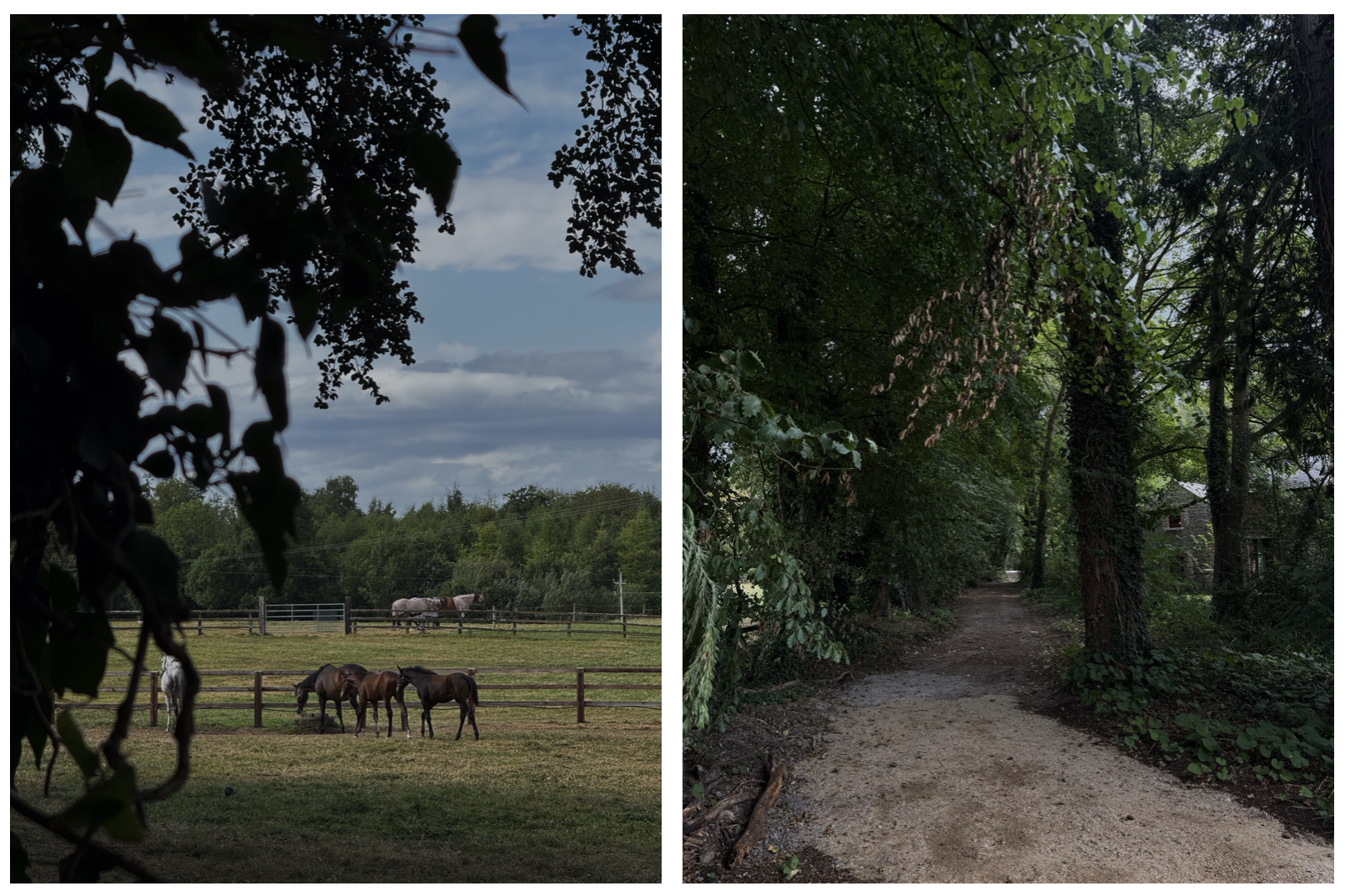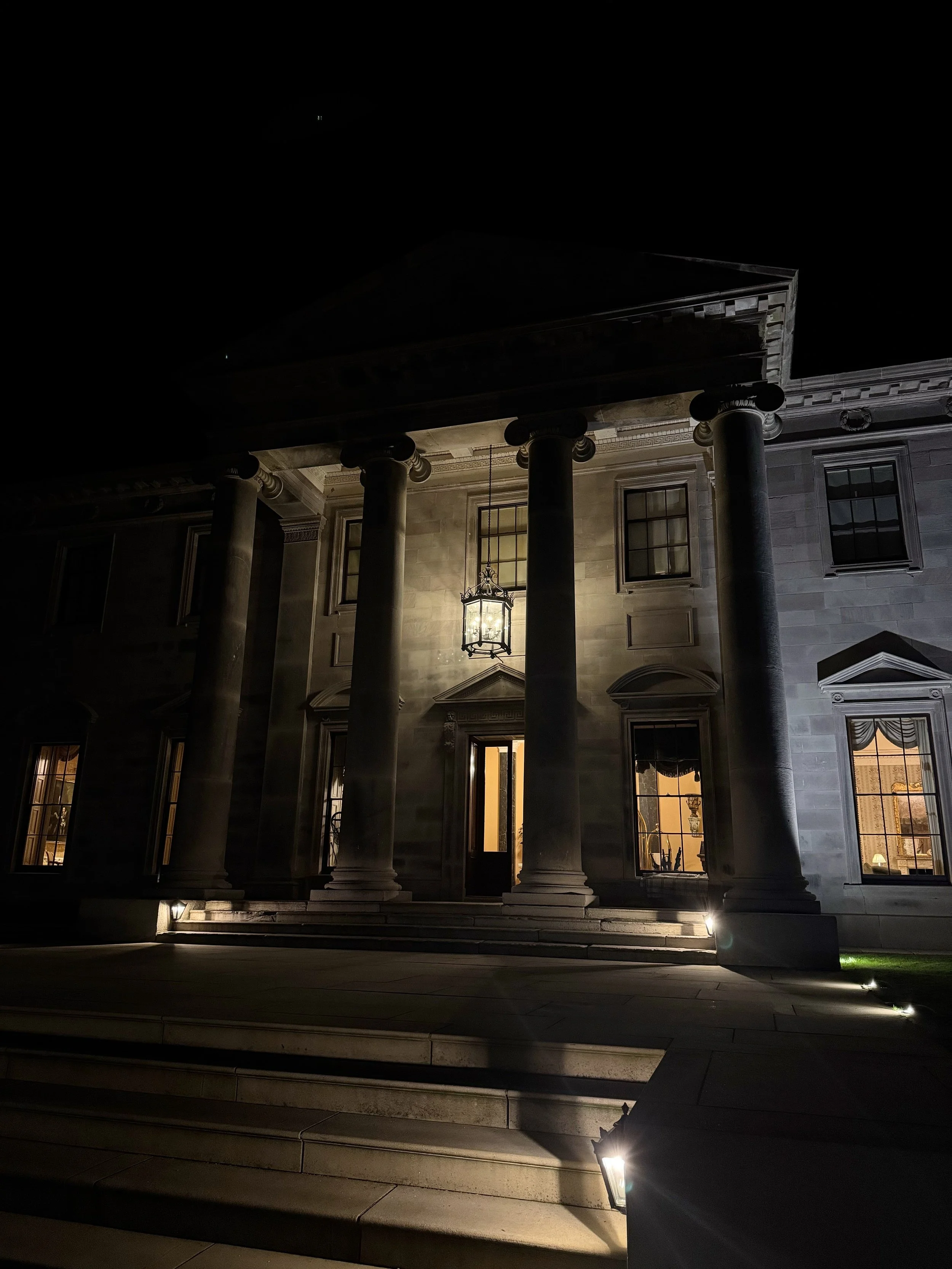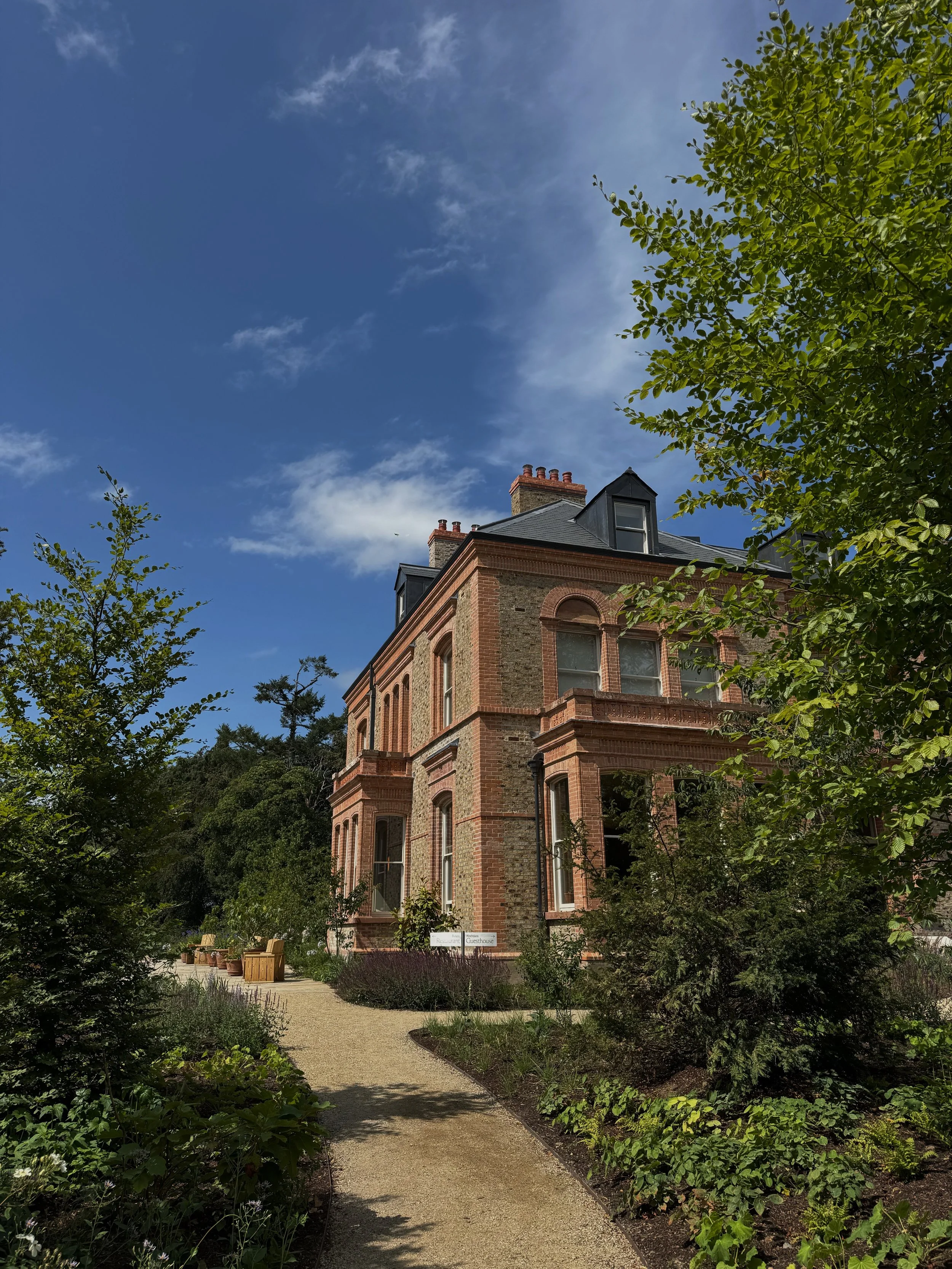
In Irish, the word ómós translates directly to homage, duty, respect, or tribute + quite frankly, the name fits like a custom-made glove when it comes to Ireland's hottest new opening. Beyond just a word, + in the flesh, the new guesthouse + restaurant set in Millbrook House, just outside Abbeyleix in Co. Laois, is something of a deeply personal expression, Cúán Greene's love letter to home that's now been shared with us all. Built in 1885, the property sits on the old De Vesci family estate + by 2024 was essentially a ruin with nature reclaiming it as its own. Upon its takeover by the team behind Ómós, led by Greene, the property underwent a six-year restoration to bring it back to life in a way only true creative foresight could manage so eloquently. What came to be was so much more than a simple renovation. Thanks to the creative depth of Cúán Greene, something truly exceptional has been brought to life; so exceptional that the moment I stepped inside, it stirred an immensely personal sense of pride within me to be Irish.
For me, there's something deeply grounded in being Irish. I love home. I love the land, the humour, the depth of our charm + character. I love the history that's made us who we are. We're strong + powerfully built, yet graceful, in possession of a certain type of poise that isn't just in our sometimes overly self-deprecating sense of self but in a unique composure + perspective that welcomes as deeply as it endures + remembers. There's a creativity here in Ireland that's inherent,one that's travelled the world over + put us on world stages across so many industries; a creativity that's deeper perhaps than anything else about us. There's a gravity here too that always draws me back to the land of home, as home. It evokes an appreciation of this little country's beauty + complexity that have always reminded me of where home is, no matter where I've travelled or lived. But standing in Ómós, I understood this love of home with new capacity + breadth: that our groundedness isn't solely in the ground we stand on, it's in the hands that shape it, + the hearts that appreciate its beauty + intricacies. Ómós is a perfect marriage of all those things: the grounded nature of the quiet Irish spirit, mixed with a sleekness that feels increasingly global + elevated.
Having opened just three weeks before our visit in late June, Ómós already held a beautiful sense of calm + confidence in every corner of the property. Like it had been operating at this level for a lifetime. Despite the pressures that, I'm sure, absolutely niggle their way into such a hugely anticipated opening, there was nothing close to strain in the air. In fact it felt like everyone + everything there was born to be there. It's unquestionable that absolutely everything has been deeply deeply considered. Every detail, every bite, each corner, smile + conversation bringing meaning to something incredibly collaborative. Everything somehow extends somewhat beyond the obvious. You can sense the energy the vision is built upon + in speaking with Cúán Greene (head chef + co-owner), who kindly invited us into the kitchen mid dinner, his vision really comes from a profoundly unassuming + humble place; that of something that sagaciously celebrates his vision of home + the talented, warm + brilliant people he surrounds himself with.
With just 16 rooms + 40 covers in the restaurant, Ómós is luxury yes, but it’s luxury feels even more luxurious somehow in it’s absence of the type of pretentiousness other places of a similar caliber of splendor. The narrative is strong. Rooted in quality, craftsmanship, excellence. They know who they are + aren't for a second screaming for the attention so rightly being directed their way. And yes, while helicopters might be landing close by, flying in VIPs + those in the know, there's a self-deprecating thread running underneath it all, again something very much Irish, something somehow both assertive yet modest, that keeps the whole thing refreshingly down to earth.
I'd been keenly following the journey for a while on Greene’s personal Substack (which you can subscribe to here) + had some sort of a knowing that something major was unfolding + I will admit I jumped online immediately upon the bookings opening up. In person though it moves you. More than I imagined. And perhaps it's no surprise as Cúán Greene's career has seen him working in some of the world's most renowned Michelin star restaurants, most notably 3 Michelin star Noma + Geranium in Copenhagen. Upon returning home to Ireland + crossing paths with John Collison, one of the Irish brothers who set up Irish payments company Stripe + a small group of investors, he set upon realising his dream to open his own restaurant. With a strong focus on home Cúán travelled all over Ireland for a number of years collecting an extraordinary array of artisans he'd later work with on every corner of Ómós. His vision is simple, there's no fluff or ridiculous extravagances, the opulence is in the simplicity, the comfort, the enjoyment of the uncomplicated. Again, very much aligned to the Irish spirit.
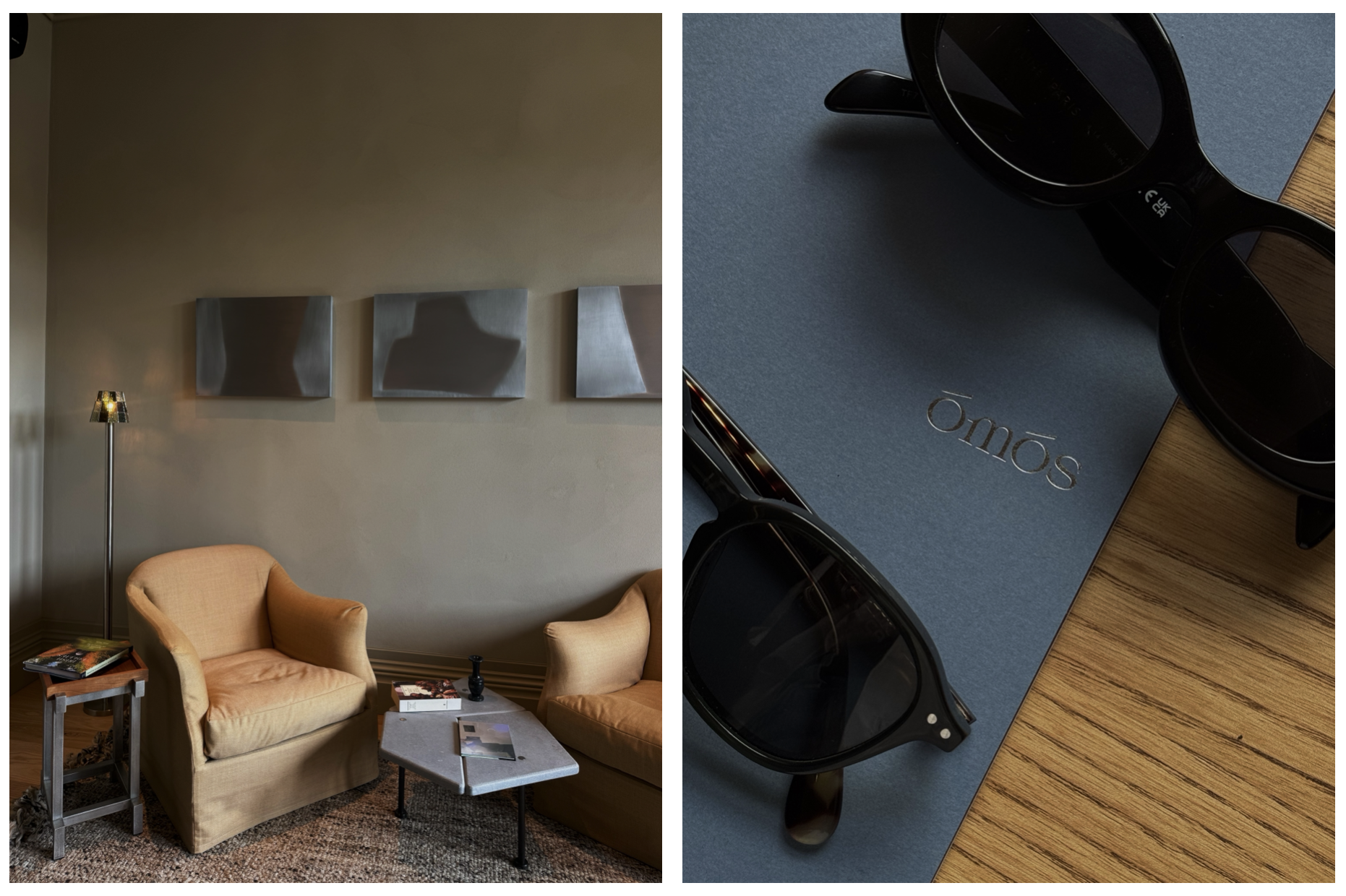
Without sounding excessive, our stay felt magical. The summer heatwave was in full swing so it actually felt like we were away away. Upon arriving we were greeted by beautiful staff members who, I'd come to learn throughout our time here, were each as beautiful as the next. We were guided around the house for a full tour, much to my delight, given how much I wanted to understand the meaning behind it all + it was every bit as interesting as I'd hoped. Thankfully we'd arrived just in time for cake hour too which, quite literally, is when the kitchen staff share the daily afternoon cake, which in acting as an indication of the spectacular food we'd experience later in the evening was exquisite. Sitting in the lounge spaces with a homemade Kombucha in hand we settled into the space as though it really were home for those (too) few precious 24 hours.
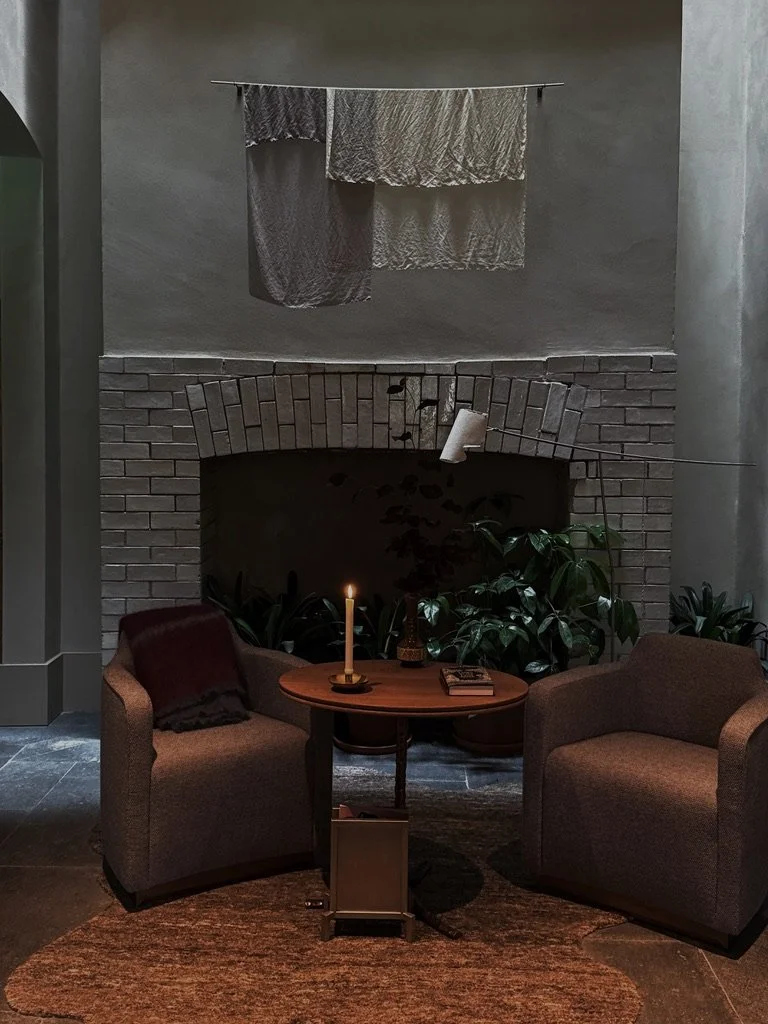
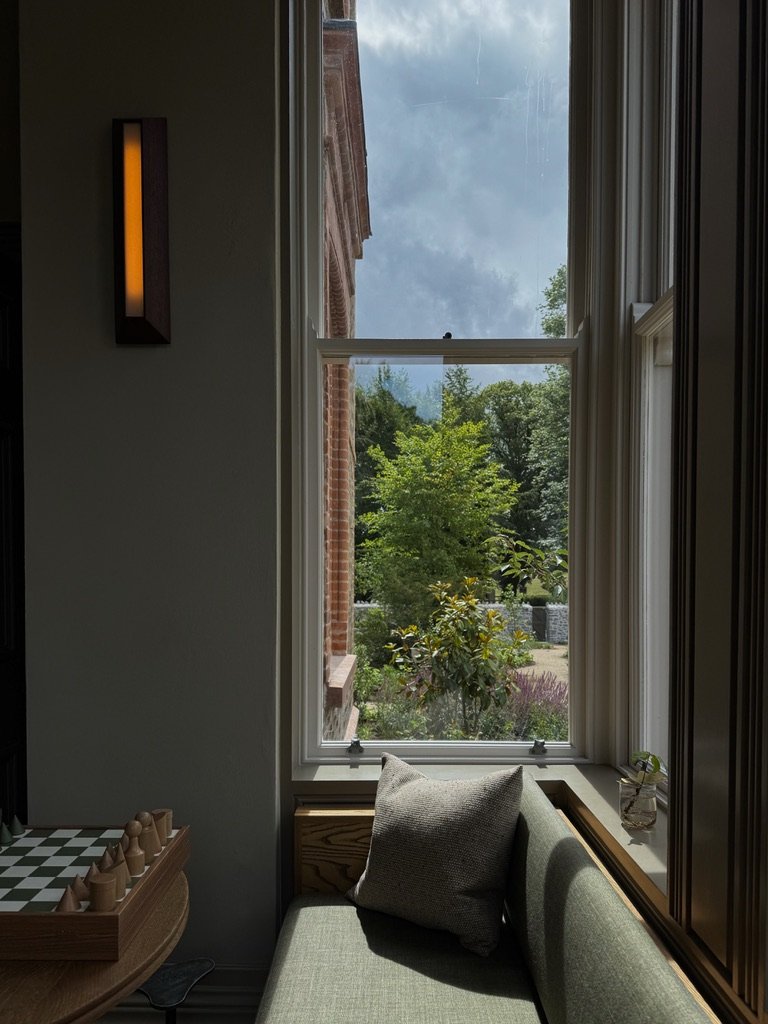
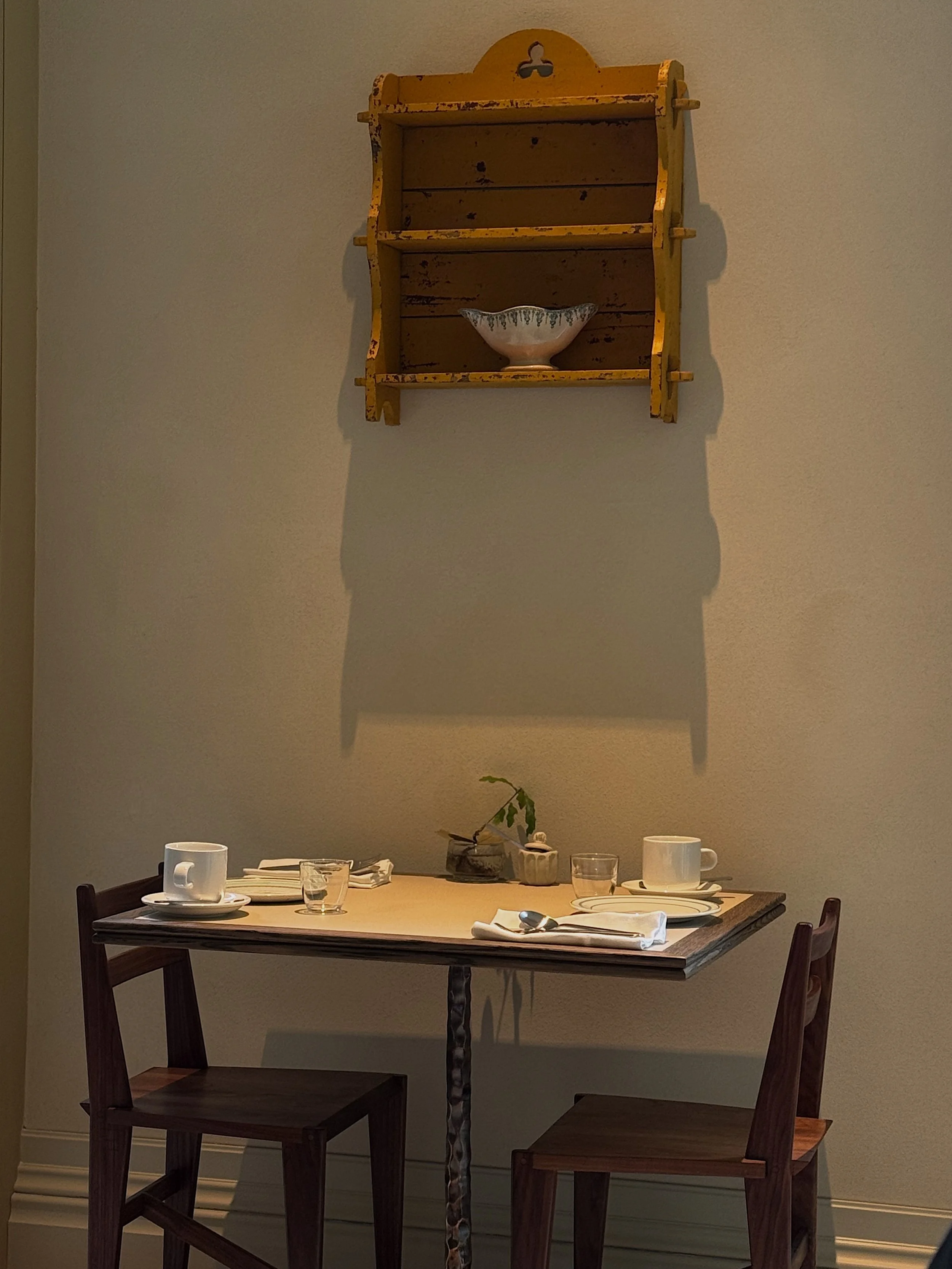
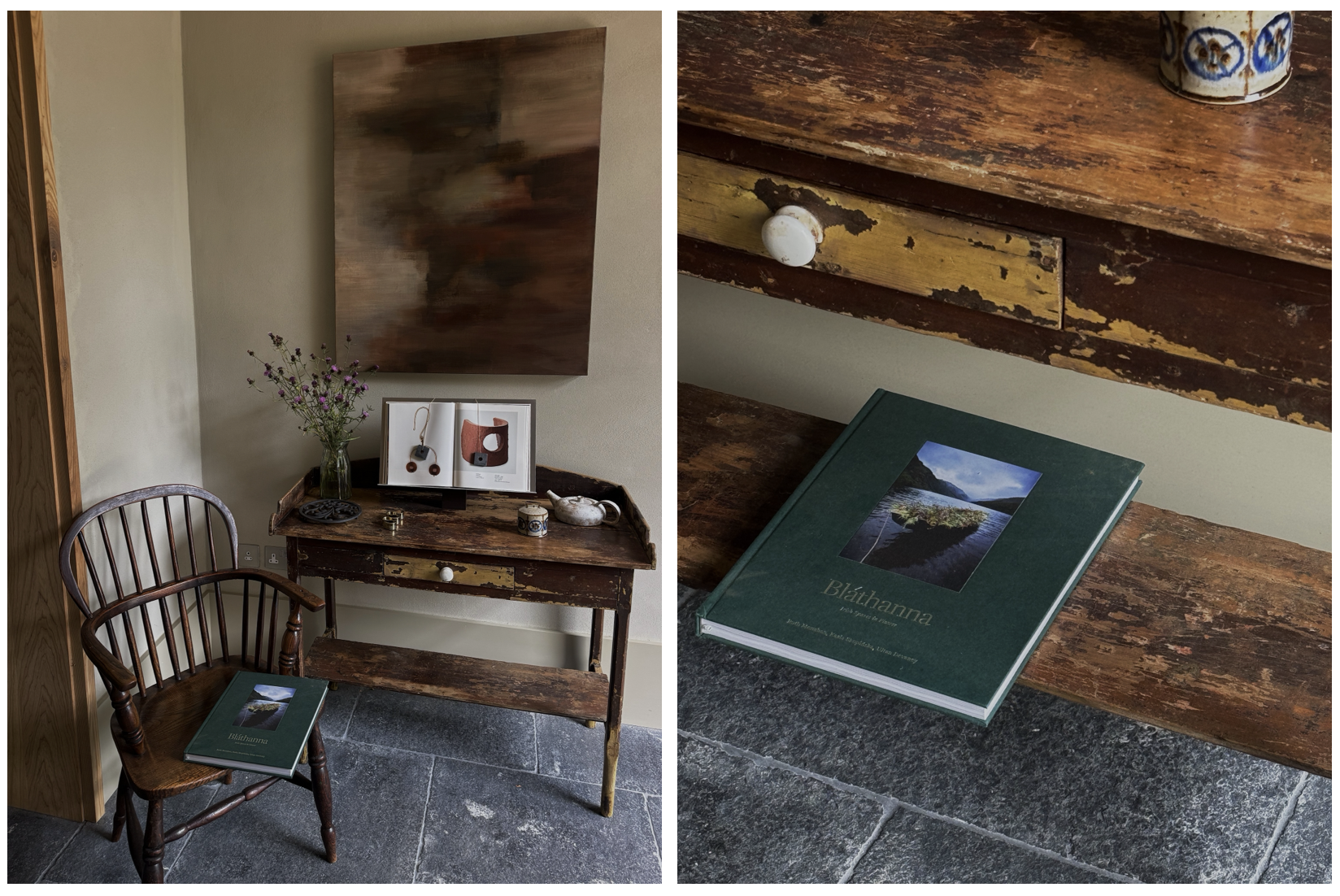
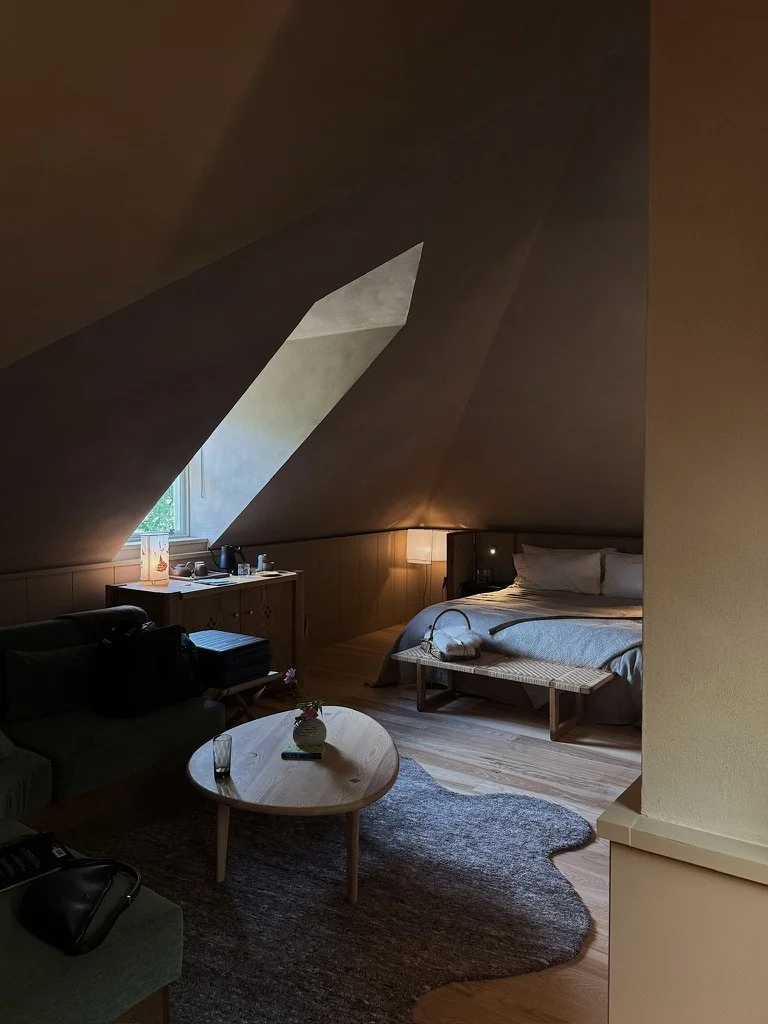
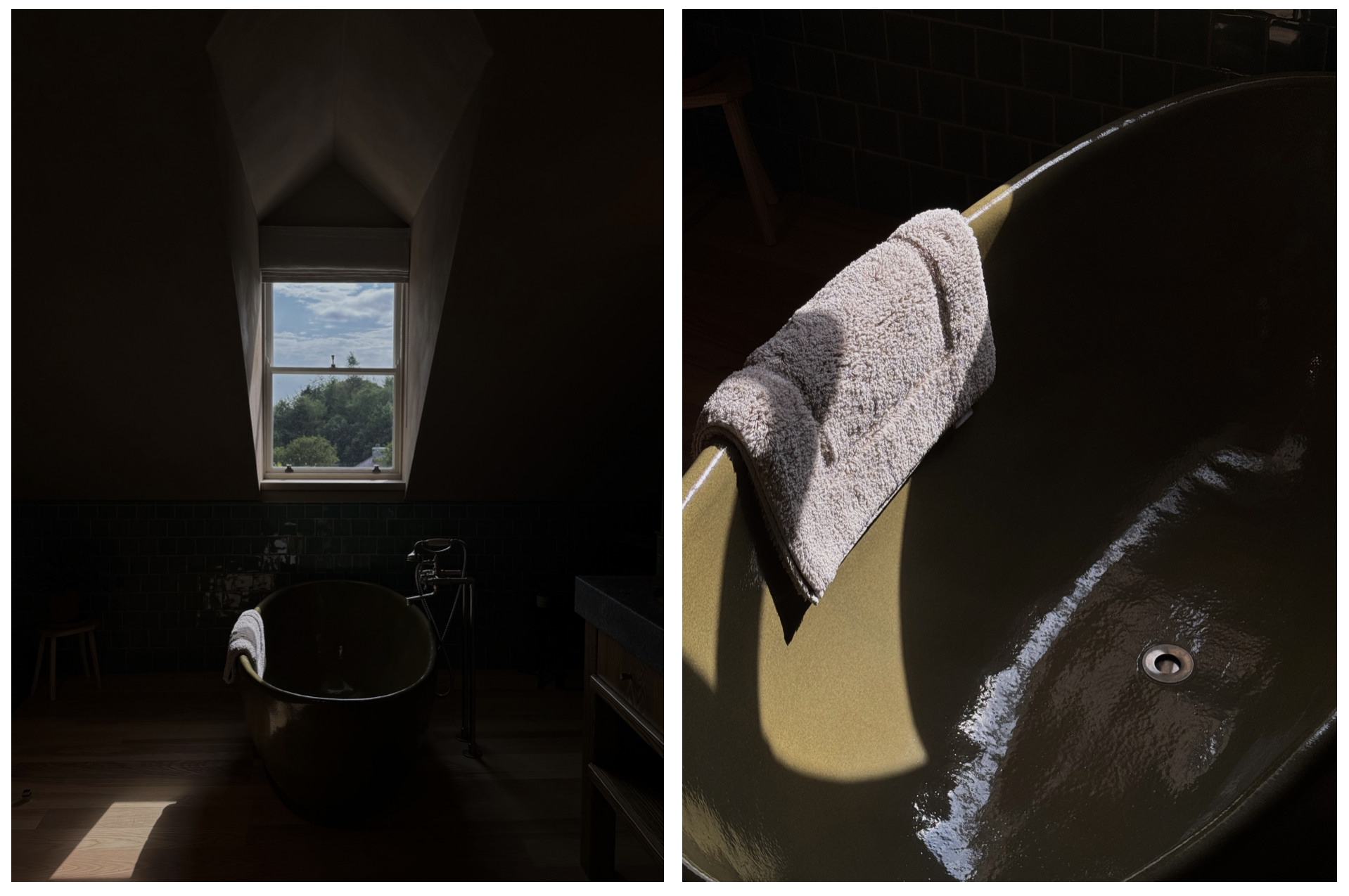
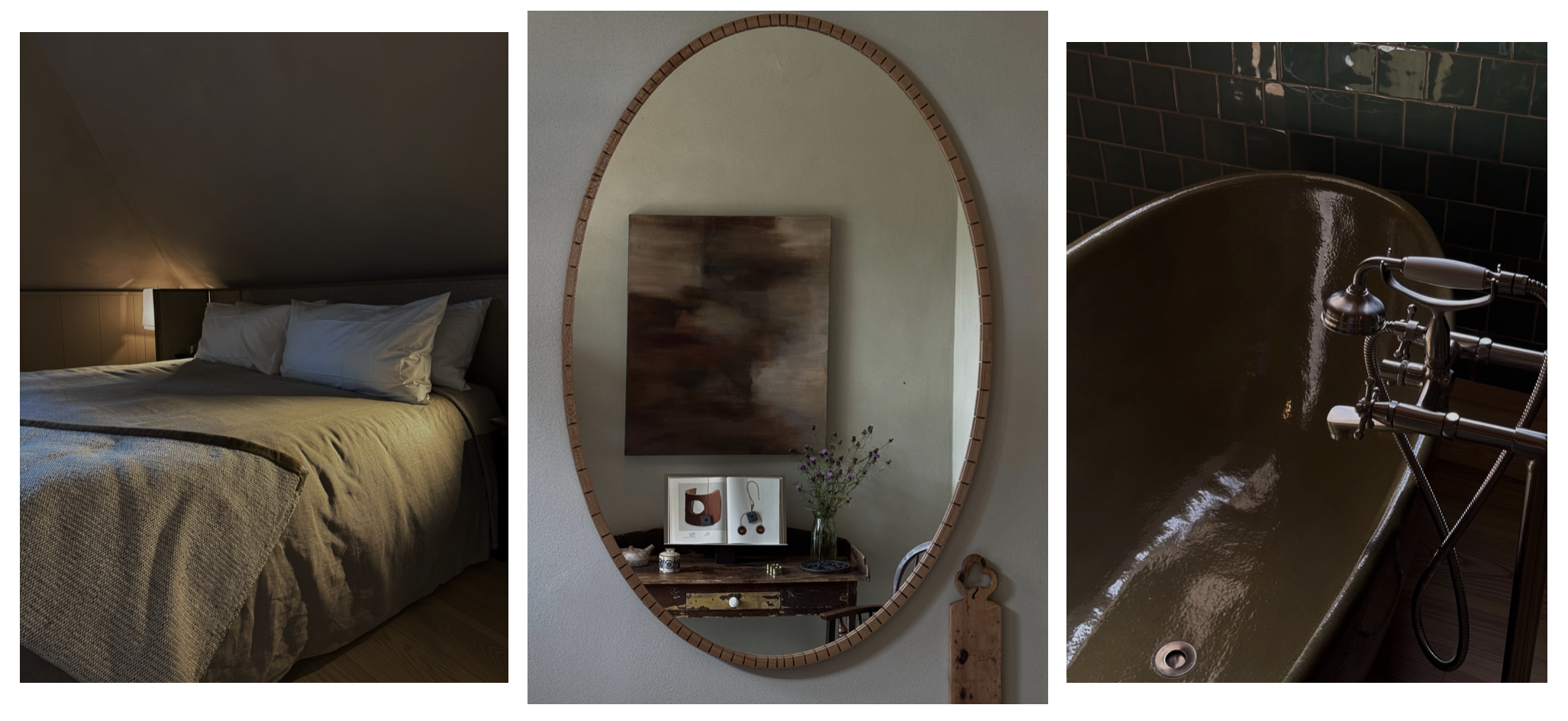
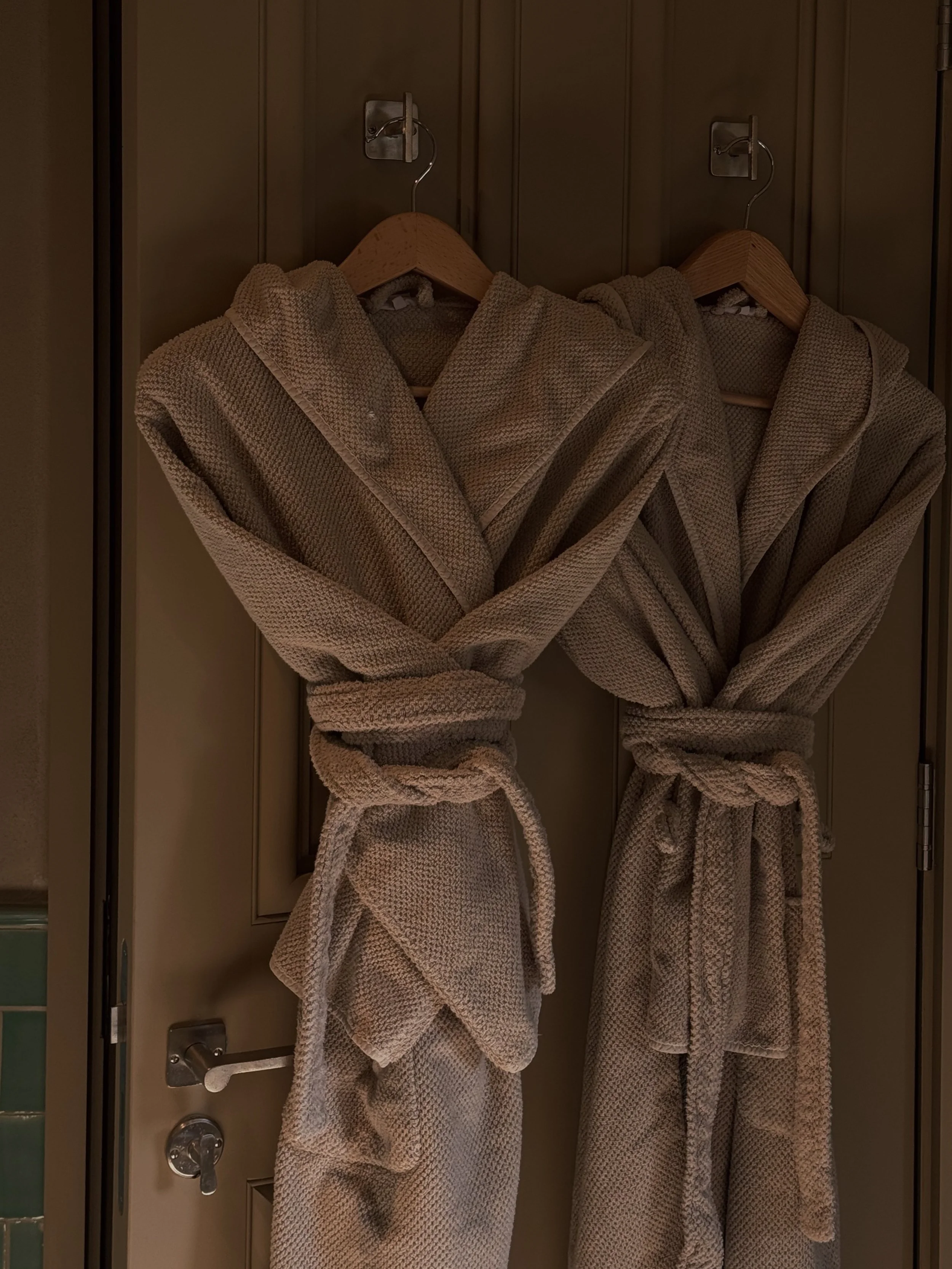
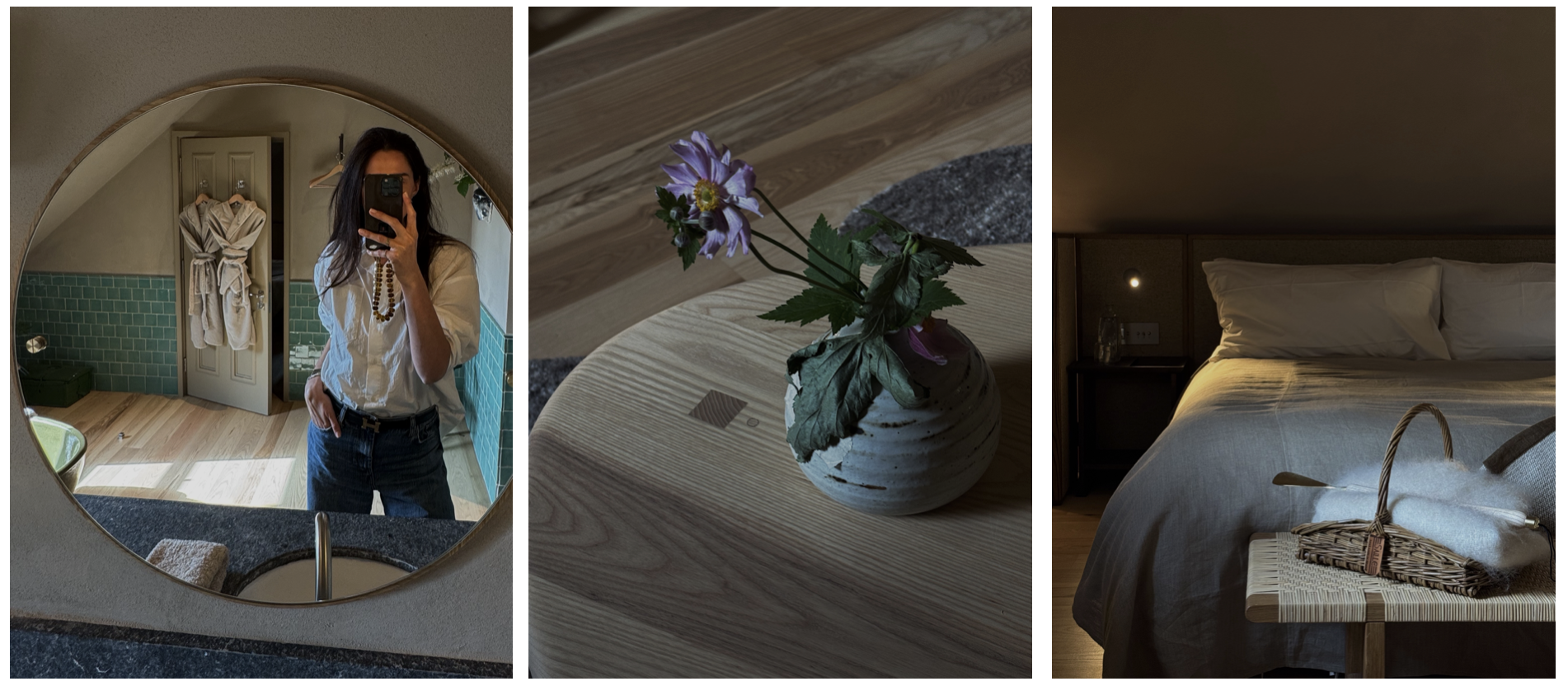
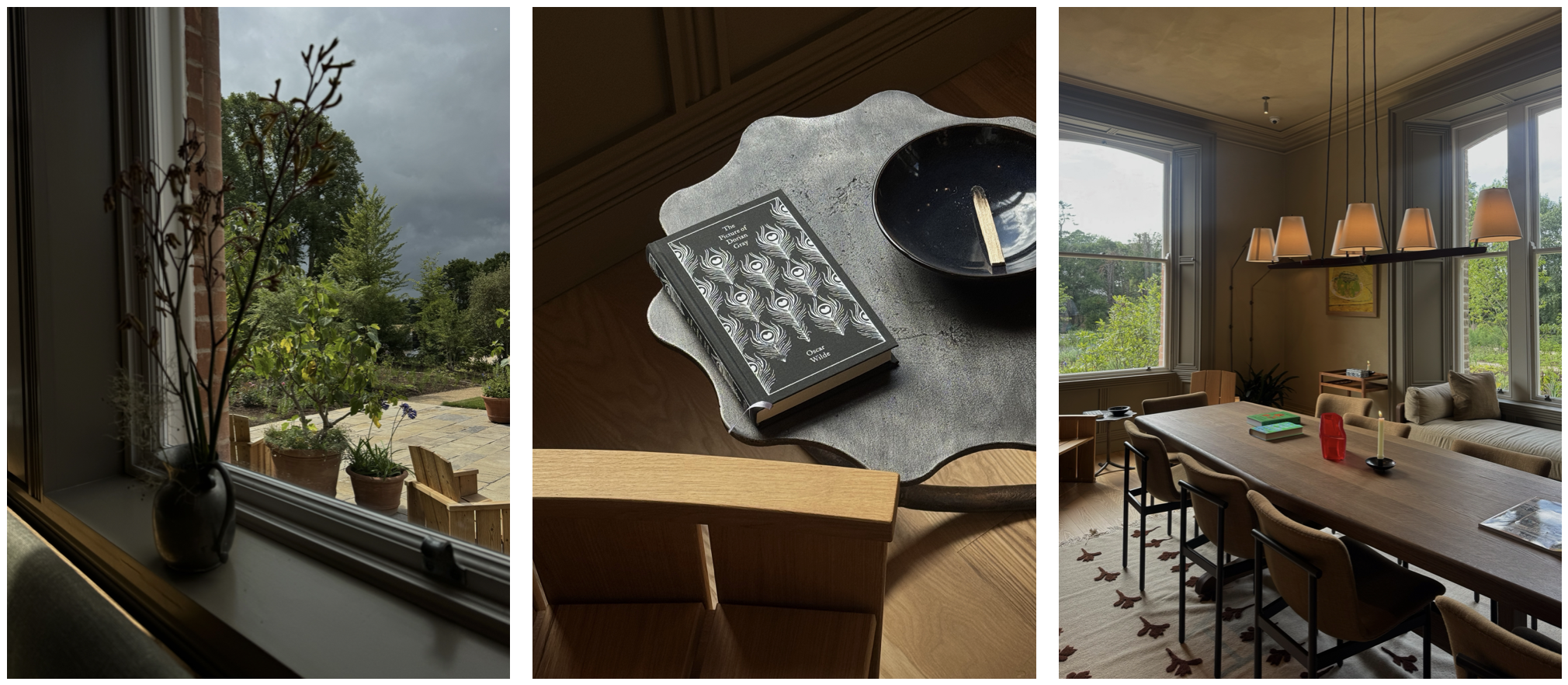
The room was incredible. Pared back yet elegantly elevated, each room holds history in the making. The interiors throughout the property were designed by two Copenhagen-based studios, Asca Studio (Cassandra Bradfield + Sofia Olsson) + Rebecca Norberg of Relief Gallery, who traveled back + forth from Denmark to study Irish vernacular design before touching a single room. Textures + materials in each room are inherently unique + important to the design process, including Kilkenny limestone, ash, + lime plaster — think stone for anything exposed, wood for anything protected. Every one of the 16 suites has its own color story pulled directly from the quality of light it receives at different times of day, so genuinely no two rooms are alike. Room 6 was where it was at for us + we were lucky enough to call it home for the night. The craftsmanship is ingrained everywhere, a hugely important part of Greene's inspiration. He's worked with so many, including ceramicist David Holden, who harvests his own clay on the Dingle Peninsula; basket maker Hanna van Aelst, who grows + weaves her own willow in Tipperary; local Laois ceramicist Clare Dooley; spoon maker Éamonn O'Sullivan of Hewn Spoons in Clare; + ceramic artist Siobhán Joyce, whose plates are shaped directly on rocks by the sea. Beds are built by Wicklow's Bear Creations with headboards upholstered in Mourne Textiles fabric — a different shade per room. The glazed ceramic bathtubs are handmade by Studio Loho in Belgium (I'd highly recommend using it, if your room has one). And in a lovely personal touch, Greene's own mother, Irish glass artist Róisín de Buitléar, made the water glasses, blown in Kilkenny + etched with the most beautifully delicate hedgerow motifs. Art on the walls includes work by Louis le Brocquy, Charles Lamb, + Maria Simonds-Gooding, some loaned from a private collector who has followed the project since its earlier newsletter days.
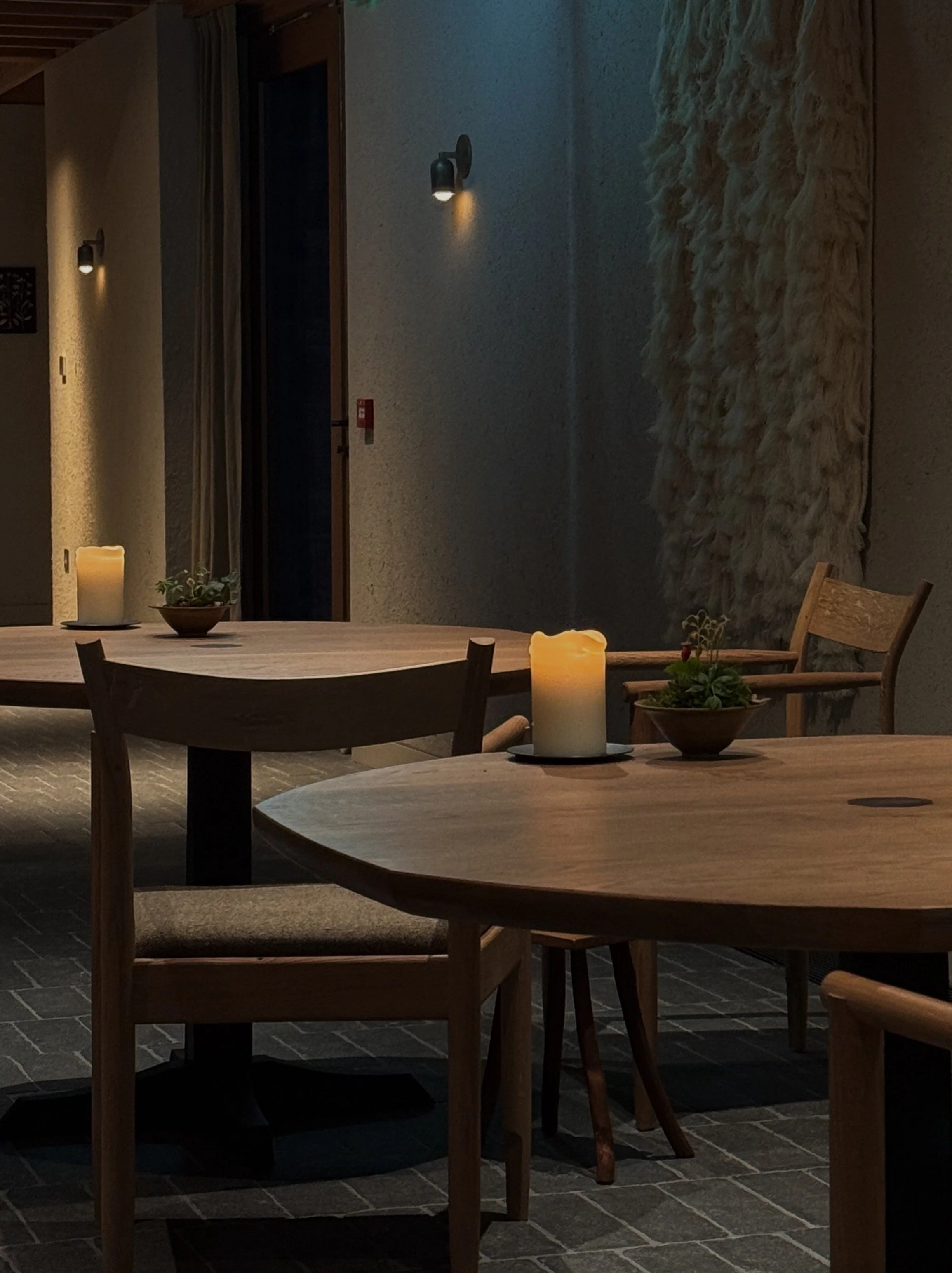
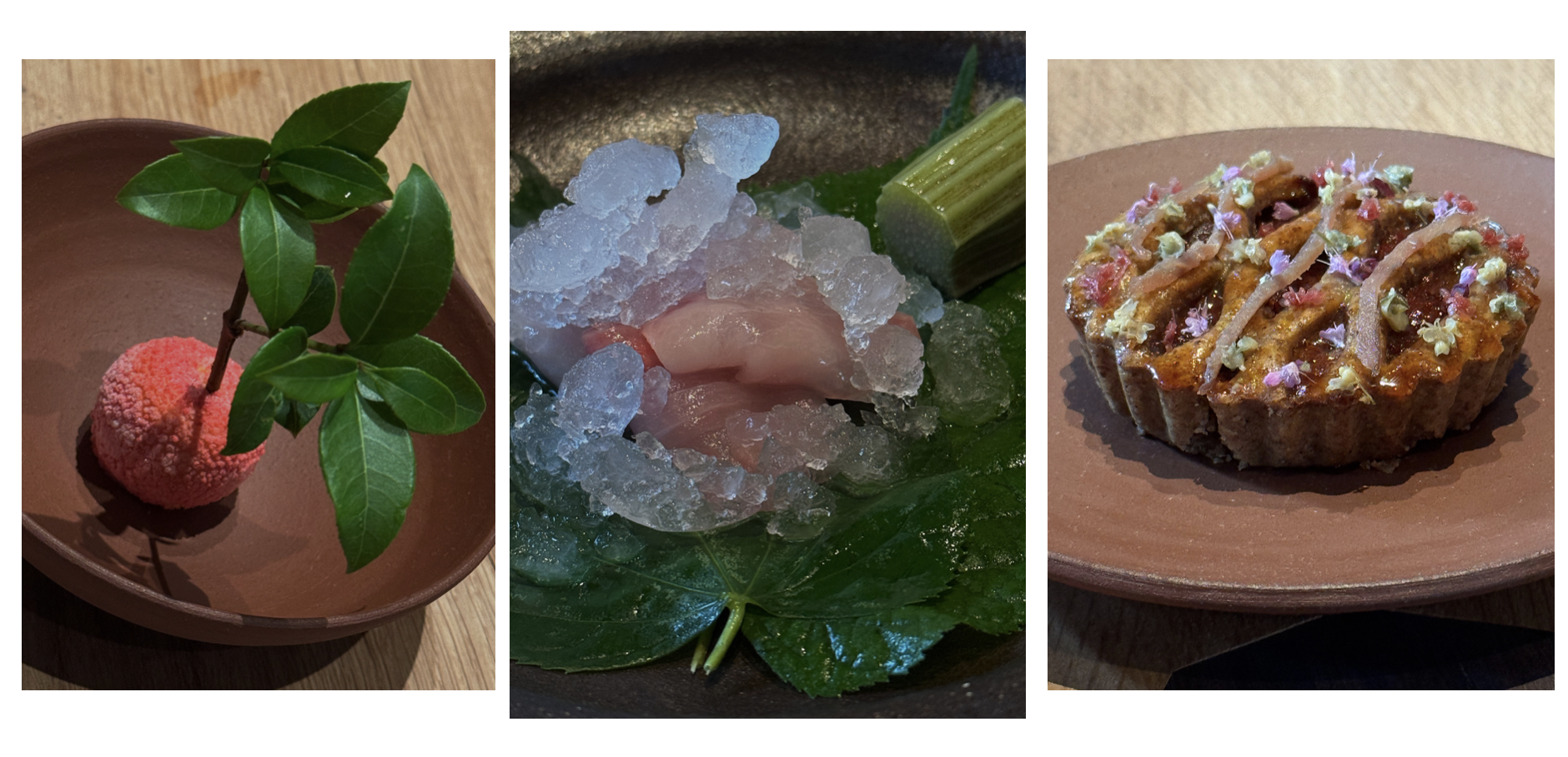
As for the food itself, well whether you stay the night or come just to be the lucky recipient of whatever's on Cúán Greene's menu that evening, it is, excuse the pun, chef's KISS in the extreme. Dinner at Ómós doesn't just begin, it unfolds right in front of you, over a long + leisurely evening of surprise + intrigue. The kitchen has no pass; dishes move directly from counter to table, so you watch everything happen. The open fire working double duty as cooking tool + focal point, the brushed steel wine bar anchoring the room like something built to be gathered around rather than served from. Greene has spoken about how the tableware came before the menu, that the ceramics guided the food rather than the other way around, + you feel that logic on the plate. Nothing arrives without a reason for the vessel it arrives in. The menu is seasonal + unshowy (my kind of high end dining), dictated less by trend than by what was pulled from the ground that morning. The level of expertise is precise, yes — Greene's years at Noma + Geranium are there in the technique but it's in no way clouded by the often cold nature of chefs at that level. Instead it's memorably generous + mesmerising: each dish stops the conversation, rearranging whatever you might have been focused on back to what's right in front of you: delicious, thoughtful, local food, deeply understood by the person making it. Being fed by someone who genuinely wants you happy rather than impressed brings a new meaning to what Ireland's food scene can be.
In understanding how moved I was to experience our night away at Ómós + how to put it into words without just a play-by-play run down of the usual things we tend to refer to upon reviewing something, it brings me to think that perhaps it's in the difference between observing + absorbing + that some people digest the beauty they witness solely through the visuals of the literal. Of what is right in front of them. Others, like myself, understand it differently. It's a feeling. Very much a completely encapsulating sense, an awareness. It’s an impression or sensation that embeds itself within you, deeper than just the surface of the skin, beauty to those who feel it, is a feeling that's often not classifiable by the spoken word. Ómós is this to me. A beauty that impressed itself upon me in a way that I feel alive in its company, not just for the optics as something vacuous or lifeless but for the fact that a simple idea, once intangible came to life as something very real, something concrete + visible not just to the naked eye but, deeper than that, in touch with the entire being of those who see beauty as a submersion, an experience.
I think a lot lately about the loss of wonder in the world. Definitely about the general loss of wonder as a whole but also of that in the way of beauty. There is so much forced beauty, very little that's left to the imagination. It’s boring these days. There’s very little that's actually genuinely interesting anymore. Very little that's out of the ordinary, nothing that really leads a new way. And maybe it's my own algorithm but I sense in general that the algorithm at large has trained us to create, not from a personal desire for what we ourselves genuinely like, enjoy or are inspired by but for the reward system that has been built to overpower the true influence of personal taste.
But Ómós is something entirely different. It leads + you get the genuine sense it hasn't been made to be plastered all over Instagram. Nor to satiate the insatiability of the machine of more, more, more or same, same, same. It sits in a space entirely its own here in Ireland. It's been created to settle you rather than transport you. To stop you in your tracks + swaddle you in the sincere warmth of its own unique + delightful world. To leave its mark upon your experiences as something memorable beyond the moment.
And perhaps my own little love letter here isn't the normal "review" of somewhere of such hot topic but it got me thinking a lot. It wasn't designed to be viral. It isn't here just for a minute, not even for the potential 15 minute fame its opening just might have warranted regarding the big names involved, nor for the 15 second attention span that's got the world in a chokehold. Ómós is here for the long-haul, it's here to grow + mature; embedding itself into the landscape of a truly thriving culinary + luxury hospitality scene in Ireland + in fact, perhaps more aptly, it's leading us all to a whole new standard, while deeply rooted in what it is, it's elevating us to entirely new Irish heights.
See more — ÓMÓS.CO